PU Foam and Sound Insulation
PU foam is an effective material not only for gap filling and insulation, but also for sound insulation. When applied particularly in door, window, wall, and ceiling cavities, it improves the acoustic performance of the space. Reducing sound transmission increases comfort in both home and office environments and contributes to energy efficiency. This article will detail the effect of PU foam on sound insulation, application techniques, and key tips.
Why is sound insulation important?
Sound insulation is crucial for both psychological and physical health in daily life. Noise pollution reduces concentration, disrupts sleep patterns, and can increase stress levels in the long term. Gaps in buildings allow sound to pass through easily. Filling these gaps is one of the fundamental steps in sound insulation.
- Wall voids: Small cracks and gaps, especially in interior walls, accelerate sound transmission.
- Door and window frames: Gaps are the easiest areas for outside sounds to pass through.
- Ceiling and floor voids: These are important points for reducing sound transmission between floors.
Sound Insulation Properties of PU Foam
The success of PU foam in sound insulation is due to its closed-cell structure and expansion properties. By filling voids, the foam prevents air passage and reduces vibrations. This provides sound insulation between spaces.
- It minimizes air passage.
- It absorbs mid- and high-frequency sounds.
- Higher sound insulation can be achieved with layered insulation.
Application Areas
Sound insulation with PU foam can be applied in many different areas:
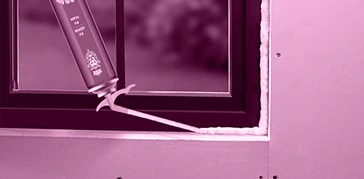
- Door and window frames: They fill gaps, preventing outside noise from entering.
- Wall cracks: Small cracks, especially in stone or concrete walls, can be filled with foam to improve sound insulation.
- Ceiling and floor transitions: Gaps can be filled to reduce sound transmission between floors.
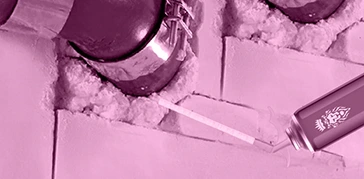
- Installations and pipe penetrations: Prevents sound from spreading through pipes.
Step-by-Step Application Guide
1. Surface Preparation
Surfaces to be treated with sound insulation must be clean, dry, and dust-free. Dirty or damp surfaces can reduce foam adhesion and filling performance.
2. Controlled Application
Foam should be applied to the gaps slowly and in a controlled manner. Expansion allowance should be taken into account, and it should not be applied excessively in a single stroke.
3. Layered Filling
In deep or wide cavities, layering the filling increases sound insulation. The first layer partially fills the cavity with slight expansion, and the second layer completes it. This method prevents flooding and maximizes sound insulation.
4. Curing Time
The foam must be allowed to cure to achieve its full performance. Pressure should not be applied to the gap before curing is complete. This process ensures the foam completely seals air passage and reduces vibrations.
5. Excess Removal and Surface Smoothing
Excess foam after expansion should be removed with a utility knife or spatula. Fresh foam can be wiped away with a cloth or foam remover. A smooth surface improves sound insulation performance and provides an aesthetically pleasing appearance.
Extra Sound Insulation Tips
- Using low-expansion foam in large voids prevents overflow and ensures a homogeneous fill.
- For outdoor applications, choose UV and moisture-resistant foam.
- Gently pressing the foam into the gaps will compress it, providing better insulation.
- When installing doors and windows, completely filling the gaps significantly reduces external noise.
- With layered filling and proper curing, both air and sound transmission are minimized.
Conclusion
PU foam is an effective and practical solution for sound insulation. Proper surface preparation, controlled application, layered filling, and sufficient curing time provide maximum acoustic insulation in spaces. When applied in door, window, wall, ceiling, and floor cavities, it both prevents the entry of external sounds and increases the comfort of the space. Choosing the right type of foam according to sound insulation needs and applying it carefully provides long-term and effective results.
The information in this text may vary from time to time depending on the manufacturer. Always check the product label.