PU Foam
PU Foam Guide
Detailed usage, assembly, and tips.
PU Foam
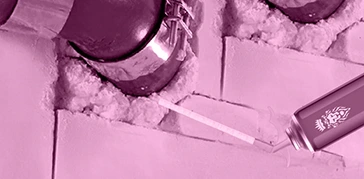
PU foam is a versatile, polyurethane-based material used for gap filling and insulation. It expands to fill voids when applied and forms a durable structure when hardened. Its lightweight and easy application make it a preferred choice for both professionals and home users. Due to its composition, it provides heat and sound insulation, is water-resistant, and compatible with many surfaces.
The polyurethane content reacts chemically during application, forming a strong bond with the surface. This bond ensures long-lasting use in areas such as door, window, or wall openings.
What is PU Foam Used For?
PU foam is primarily used for gap filling, assembly support, and insulation purposes. Its main functions include:
- Gap filling: Effectively fills gaps created around doors, windows, or pipe penetrations.
- Insulation: Provides sound and heat insulation, contributing to energy savings.
- Mounting support: Ensures the mounting remains secure during door and window installation.
- Water and moisture barrier: Prevents water leakage in exterior or interior applications.
These functions ensure maximum efficiency with proper application. Especially in construction and renovation projects, PU foam offers both a fast and reliable solution.
Applications of PU Foam
PU foam can be used in a wide variety of fields. The main areas of application are:
- Door and window installations
- Wall and ceiling cavities
- Areas requiring heat and sound insulation
- Pipe and fitting penetrations
- Furniture and decorative fillings
It can be applied in homes, offices, or industrial settings. It is a practical and economical solution, especially for assembly, insulation, and filling work.
How to Apply PU Foam?
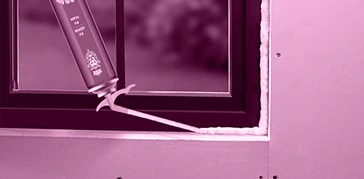
The tube should be shaken well during application and an application tool should be used. The surface must be clean and dry. Apply to gaps in a controlled manner, taking expansion into account. Large gaps should be filled in layers.
Avoid contact with the surface during the curing period after application. Excess foam can be wiped away with an eraser or cloth before curing. Correct application improves adhesion strength and filling performance.
How much does PU foam expand?
The expansion rate of PU foam depends on the type and application conditions. It generally expands by 20-40%. Controlled application and layered filling are recommended to prevent overflow in large voids. In outdoor applications, expansion and curing time may vary with ambient temperature.
PU Foam Drying Time
Drying time depends on application thickness, ambient temperature, and humidity. Thin layers reach touch-dryness in 10-15 minutes, while thicker applications may take 4-6 hours to fully cure. After curing is complete, excess foam can be trimmed and the surface smoothed.
PU Foam Door Installation
In door installation, PU foam fills gaps, ensuring the door remains stable. Edge gaps should be filled carefully, and mounting brackets should be used. Attention should be paid to the curing time.
PU Foam Window Installation
In window installations, PU foam provides both insulation and mounting stability. The surface must be clean and dry, and gaps should be filled layer by layer. Excess foam should not be applied to prevent overflow.
PU Foam Insulation Properties
PU foam is effective in heat and sound insulation. By filling gaps around walls, ceilings, and windows, it prevents energy loss and reduces sound transmission. Its insulation performance improves with increasing density.
What surfaces does PU foam adhere to?
It adheres to many surfaces such as wood, concrete, brick, metal, and PVC. Adhesion may be reduced on smooth surfaces; in this case, it is recommended to slightly roughen the surface. The surface must be clean and dry.
Is PU foam waterproof?
PU foam is water-resistant, but not completely waterproof. For outdoor applications, water and UV-resistant types should be preferred. For indoor applications, water resistance is usually sufficient.
How to remove excess PU foam?
Excess or overflowing foam can be removed with a cloth or spatula before curing. Cleaning after curing is more difficult and may require cutting or sanding. Fresh foam cleaners can also be used.
PU Foam Defects and Correction
In case of incorrect application, excessive foam overflow, insufficient filler, and lack of adhesion may occur. The excess foam can be corrected by cutting it off, and the insufficient filler can be reapplied in layers.
Types of PU Foam
PU foams vary according to their expansion rate, intended use, and temperature conditions. There are summer, winter, high-expansion, and low-expansion types. The choice should be made according to the application area and whether it will be used indoors or outdoors.
PU Foam: Winter and Summer Difference
Winter PU foam can be applied at low temperatures. Summer types, on the other hand, perform optimally at temperatures between 5-35°C. Choosing the wrong type will negatively affect expansion and adhesion performance.
PU Foam Gap Filler
Gap filling is the primary function of PU foam. Large gaps should be filled in layers, and controlled application is necessary to prevent overflow. Care should be taken at edges and corners.
PU Foam Sound Insulation
When applied densely and evenly, PU foam significantly reduces sound transmission. When applied to wall and ceiling cavities, it provides sound insulation between rooms. It also forms an effective sound barrier around pipes and plumbing penetrations.
PU Foam Adhesion Strength
PU foam provides strong adhesion on porous and rough surfaces. Adhesion occurs both chemically and mechanically. Surface cleaning, dryness, and slight roughening enhance adhesion.
PU Foam Storage Conditions
PU foam tubes should be stored upright in a dry and ventilated environment at a temperature between 5-25°C. Opened tubes should be used shortly after opening, and the tube cap should be kept closed. Extremely hot or cold environments reduce expansion and curing performance.
PU Foam Professional Tips
Here are some tips for professional application:
- The surface must be clean and dry.
- The application should be done in layers.
- Mounting brackets and clamps must be used.
- No intervention should be made during the curing period.
- Store the tube upright and shake well before use.
- Excess foam should be cleaned up immediately, and if it has dried, it should be cut off.
These methods increase durability in door, window, wall, and cavity filling applications, maximize sound and heat insulation, and ensure a long lifespan for the installation.
The information in this text may vary from time to time depending on the manufacturer. Always check the product label.