Is PU foam waterproof?
PU foam is one of the most preferred filling and fixing materials in construction and assembly work. Its water resistance is crucial for outdoor applications, window and door installations, and crack and gap filling. So, how water-resistant is PU foam and under what conditions can it be used safely?
Water Resistance of PU Foam
PU foam, thanks to its closed-cell structure, largely prevents direct water penetration. This feature provides an advantage in both indoor and outdoor applications. However, it is important to remember that PU foam is not completely waterproof; its performance may change if exposed to direct water for a long time or in contact with submerged water.
- Cured foam is superficially impermeable to water.
- Moisture and brief contact with water usually don't cause problems.
- Additional insulation may be required in areas that remain underwater for extended periods or are buried.
Interior Applications
PU foam is quite safe for interior use due to its low risk of water exposure. It provides both insulation and fixation, especially when used around doors and windows, and in ceiling and wall cavities. Even moisture or minor water leaks indoors do not impair the foam's performance.
Outdoor Applications
There are important points to consider when using the foam outdoors. Especially when applying it in areas such as roofs, exterior wall cavities, and balcony edges, it is recommended to cover the foam with a suitable material.
- It should not be directly exposed to outdoor weather conditions.
- It should be protected against UV rays.
- Additional insulation or sealing materials should be used in areas where water may accumulate.
For use on damp surfaces.
PU foam can also be used on damp surfaces. Adhesion performance does not decrease on slightly damp concrete, wood, or brick surfaces; on the contrary, slight moisture supports the foam's adhesion to the surface. However, if the surface is excessively wet, the foam cannot expand and its adhesion performance decreases.
Factors Affecting Water Resistance
The water resistance of PU foam depends on several factors:
- Curing time of the foam: Performance will decrease if exposed to water before it is fully cured.
- Application surface: Porous and clean surfaces adhere better.
- Type of foam used: Fast-curing varieties designed for outdoor use are more water-resistant.
- UV and external factors: Direct sunlight and weather conditions can affect the durability of the foam.
Applications of Waterproof PU Foam
Properly applied waterproof PU foam can be safely used in many areas:
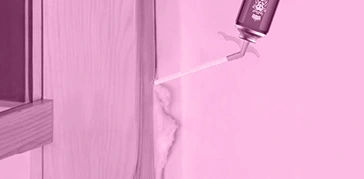
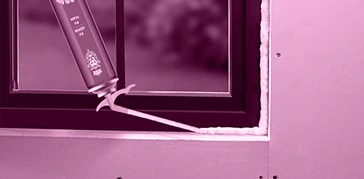
- Window and door frame installation
- Crack and gap filling.
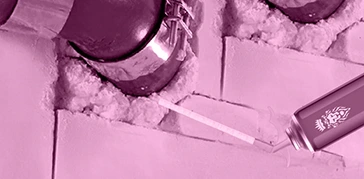
- Pipe penetrations and pipe surrounds
- Balcony and terrace edges
- Exterior wall insulation
Application Tips
- Shake the tube well before applying the foam to the surface.
- Apply carefully, taking expansion into account.
- Do not apply pressure or load to the surface before curing is complete.
- For prolonged outdoor use, support the surface with a protective coating.
Conclusion
PU foam, thanks to its water-resistant structure, can be safely used in both indoor and outdoor applications. With proper surface preparation, correct application, and suitable environmental conditions, the foam retains its insulation and fixing functions for a long time. However, in areas constantly exposed to water, taking additional protective measures improves performance.
The information in this text may vary from time to time depending on the manufacturer. Always check the product label.