What surfaces does PU foam adhere to?
PU foam is one of the most preferred fixing and filling materials in the construction industry. One of the biggest reasons for this is its high adhesion strength to different surfaces. When applied correctly, PU foam adheres securely to wood, concrete, metal, brick, and many other surfaces and lasts for many years.
Adhesion to Wooden Surfaces
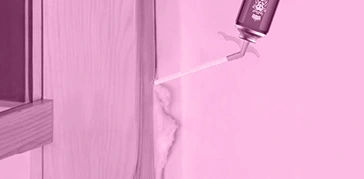
Wooden surfaces are one of the most common surfaces for foam application. PU foam adheres to the wooden surface through both mechanical and chemical bonding. A clean and dry surface improves adhesion performance.
- The porous structure of wood facilitates the mechanical adhesion of the foam.
- Adhesion decreases if there is dirt or dust on the surface.
- It can be applied to damp wooden surfaces, but they should not be too wet.
Concrete and Plastered Surfaces
PU foam exhibits very high adhesion to concrete and plastered surfaces. Application on these surfaces is often preferred in assembly and insulation work.
- Surface roughness improves the mechanical adhesion of the foam.
- Dusty surfaces should be cleaned and, if necessary, slightly moistened.
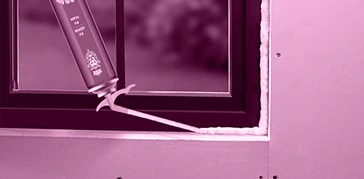
- It provides a strong fastening, especially when installing door and window frames on concrete surfaces.
Brick and Aerated Concrete Surfaces
Porous building materials like brick and aerated concrete allow the foam to adhere very well. Its ability to fill voids provides both fixation and insulation.
- It fills the gaps between aerated concrete and brick, ensuring the structural integrity of the building.
- A dry and clean surface improves adhesion.
- When using excessive amounts of foam on these surfaces, care must be taken to avoid pressure build-up due to expansion.
Metal Surfaces
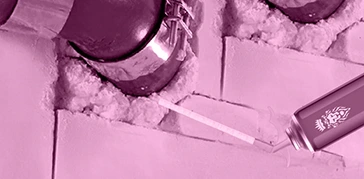
Because metal surfaces are non-porous, foam adhesion can be relatively more difficult. However, with proper preparation and application, high adhesion can be achieved even on metal surfaces.
- The surface must be free of rust or oil.
- Adhesion improves if the metal surface is slightly roughened.
- Careful application is required on aluminum, steel, or iron surfaces.
Glass and Plastic Surfaces
Foam adhesion is limited to glass and some hard plastic surfaces because they are non-porous. Additional precautions or the use of a primer to improve adhesion may be necessary on these surfaces.
- Foam is commonly used as a filler around glass edges.
- Although foam can provide a filling on plastic surfaces, especially PVC, complete adhesion is not always guaranteed.
- Therefore, careful and controlled application is required on these surfaces.
Surface Preparation and Cleaning
Regardless of the surface, proper surface preparation before application is necessary for maximum adhesion of PU foam:
- It must be cleaned of dust, dirt, and grease.
- It should be slightly moistened if necessary.
- Irregular particles or loose materials should be removed.
These simple preparation steps improve the durability and insulation performance of the foam.
Application Errors and Points to Note
Errors made during PU foam application can negatively affect adhesion and durability. The most common errors are:
- Leaving the surface dirty or dusty
- Excessive foam application and subsequent pressure build-up due to expansion.
- The surface is too damp or wet.
- No pre-preparation is required on non-porous surfaces.
Conclusion
PU foam is a versatile material that provides high adhesion to various surfaces. It can be safely applied to many surfaces such as wood, concrete, brick, and metal. With proper surface preparation and controlled application, it is possible to achieve long-lasting results in both fixing and insulation.
The information in this text may vary from time to time depending on the manufacturer. Always check the product label.