PU Foam Insulation Properties
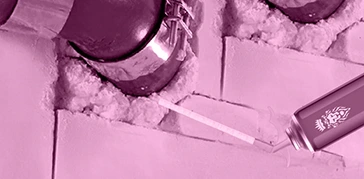
PU foam insulation properties have made it one of the most preferred products in both the construction sector and minor repair jobs. Its effective results in heat, sound, and air insulation make it a versatile solution. Furthermore, its ease of application, low cost, and quick results make it a popular choice among users.
Properties Affecting the Insulation Performance of PU Foam
The insulation power of PU foam depends on several key properties. These properties are affected by the foam's structure, expansion capacity, and curing process.
- Closed cell structure
- High expansion ratio
- Density after curing
- The ability to completely fill the gaps.
- Strong adhesion mechanism to the surface it is applied to.
The combination of these factors makes foam a successful insulation material in many areas.
Thermal Insulation Performance
PU foam is a material with a low thermal conductivity coefficient. Therefore, it significantly reduces the transfer of heat from the outside to the inside or from the inside to the outside. It helps to keep the ambient temperature more stable in both summer and winter.
Structural characteristics that affect thermal insulation:
- Its closed-cell structure prevents air passage.
- By completely filling the gaps, it eliminates thermal bridges.
- It adheres to the surface, forming a seamless insulation layer.
Thanks to these features, it significantly reduces heat leaks in places such as doors, windows, cracks, gaps, and around plumbing.
Sound Insulation Performance
Another important advantage of PU foam is its sound insulation properties. Especially in narrow spaces or thin surfaces, the foam expands to fill the gap, reducing sound transmission. While not a fully professional sound insulation product, it does have a noticeable quieting effect.
So how does foam contribute to sound insulation?
- It prevents sound from echoing by filling in the gaps.
- It reduces outside noise by cutting off airflow.
- It prevents acoustic leaks in door and window gaps.
It is particularly effective in reducing wind noise, external noise, or door slamming sounds in homes.
Air and Dust Insulation
One of the most distinctive features of PU foam is its ability to completely seal gaps. This feature provides a significant advantage, especially in door and window installations. Because it prevents airflow in the area where it is applied, it both reduces energy losses and helps keep the environment cleaner.
- It prevents wind leaks.
- It reduces the passage of dust from the outside.
- It maintains the room's thermal balance.
Therefore, it is preferred for both indoor comfort and energy efficiency.
Moisture and Water Vapor Resistance
Although PU foam does not directly allow water to pass through, it is not a waterproofing material on its own. However, because it is resistant to moisture vapor, it retains its shape for a long time and does not rot. This feature is particularly advantageous in insulation applications in interior spaces.
However, if the surface of the foam will be in direct contact with water for an extended period, it is recommended to cover it or reinforce it with a suitable insulation material.
Gap Filling and Thermal Bridge Prevention
Thanks to its expansion properties, the foam completely seals gaps in walls, ceilings, floors, and window frames. This prevents the formation of thermal bridges. Thermal bridges are weak points where indoor heat transfers most quickly to the outside environment.
PU foam improves both heat and sound insulation performance by filling these weak points.
Easy Application Advantage
When choosing insulation materials, ease of application is just as important as performance. PU foam is a very practical product in this respect. Even a single person can easily apply it with a spray gun or tube.
Advantages of ease of use:
- It doesn't require a professional team.
- It offers effective solutions in challenging areas.
- It dries quickly and is ready to use in a short time.
Resistance to Thermal Movements
After curing, the foam acquires an elastic structure. This makes it resistant to expansion and contraction during temperature changes in both summer and winter. It will not tear or separate even if the surface moves.
This feature contributes to both long-lasting insulation and adhesion.
Application Errors Affecting Insulation Quality
The high insulation performance of PU foam is only possible with correct application. Errors made during application can reduce this performance.
The most common mistakes:
- Insufficient foam application.
- Excessive foam application
- The surface remains too dry.
- Applying load before curing is complete
- Incorrect measurement of the gap
When these mistakes are avoided, the insulation properties of the foam reach their maximum level.
Application at the Correct Thickness
The insulation performance of the foam is directly proportional to its thickness in the area where it is applied. If applied too thinly, gaps may not close, while if applied too thickly, unnecessary pressure and uneven expansion may occur.
Ideal application:
- Enough to fill the void.
- Without putting pressure on the case or surface.
- With controlled gun adjustment.
Areas where PU foam is used for insulation.
The wide range of applications for foam demonstrates its versatile insulation properties.
- Door and window frames
- Wall cracks
- Pipe connections
- Channel spacing
- Box interiors and spaces
- Ceiling edges
Each of these points represents an area of weak insulation in the structure. The foam seals these areas, improving overall insulation performance.
Durability and Longevity
Once cured, the foam retains its shape for many years. Its resistance to decay, collapse, and separation makes the insulation permanent. Therefore, it is preferred as a long-term solution in many buildings.
Conclusion
PU foam offers versatile performance in insulation. It provides effective results in heat, sound, and air insulation. Its practical application, high durability, and long-lasting results make it one of the most frequently preferred insulation materials.
The information in this text may vary from time to time depending on the manufacturer. Always check the product label.