What is PU Foam Used For?
PU foam is a versatile material used in the construction industry for a wide variety of applications such as gap filling, assembly, insulation, and sealing. Its flexible structure, high adhesive strength, and rapid expansion make it a preferred choice for both professional craftsmen and individual users. So, what exactly is this product used for? In which areas is it used, and what advantages does it offer? We will address all these questions comprehensively in this article.
PU foam reacts quickly on the surface it is applied to, increasing in volume and completely filling the gaps. This property makes it possible to create a solid support, especially in assembly processes. At the same time, thanks to its insulation properties, it effectively controls ambient temperature and sound transmission.
Used for filling gaps.
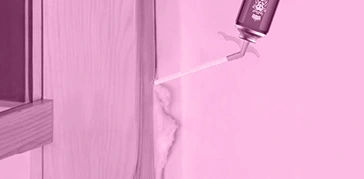
The most common use of PU foam is to fill gaps between building elements. It provides strong adhesion to many surfaces, completely sealing the area where it is applied. It offers a practical solution for many locations such as wall cracks, brick gaps, plumbing voids, and window frames.
Thanks to this feature, it is preferred in both interior and exterior applications. The foam, which hardens after application, fills the gaps, provides additional strength, and increases the stability of the surface.
- Closing the gaps between the bricks.
- Filling in drywall joints
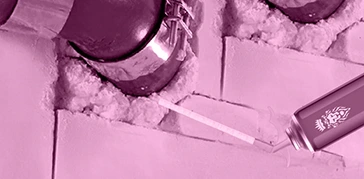
- Sealing at pipe and plumbing penetrations.
- Closing wall cracks
- Eliminating gaps between panels
Used in Assembly Processes
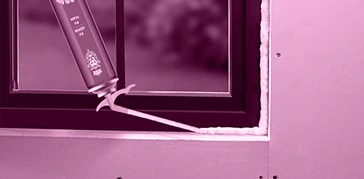
One of the best-known uses of PU foam is as an assembly support material. Especially in door and window installations, it fills the gaps between the frame and the wall, helping to secure the frame. Thanks to its expansion properties, it creates a tight bond between surfaces.
The foam used during installation has a flexible structure that can adapt to surface movements. This prevents deformations caused by micro-movements that may occur over time.
- Door frame installation
- Window frame fixing
- Cabinet, panel and roof assemblies
- Fixing the thermal insulation panels
- Interior furniture and decor assembly supports
Provides thermal insulation.
PU foam, by its nature, contains many air bubbles. These air bubbles create a structure with high insulation value. Therefore, the product provides effective thermal insulation in the area where it is applied. It offers particularly successful performance in preventing heat loss around windows and doors.
Because the applied foam completely seals the gaps, it prevents the formation of thermal bridges. This reduces heat loss from interior spaces, especially in winter months. Similarly, in summer months, it limits the passage of hot air from outside into the interior space.
Provides sound insulation.
PU foam also functions as a sound insulation material. Thanks to its porous structure, it absorbs sound vibrations, reducing echo and sound transmission. Therefore, it contributes to sound control, especially when applied to interior doors, partition walls, and plumbing cavities.
PU foam, especially suitable for thin-walled structures or rooms with high sound transmission, offers a simple yet effective solution. Sealing structural voids directly reduces sound flow.
Provides a leak-proof seal.
Another important function of PU foam is its sealing property. Because it fills gaps, it largely prevents the entry of air, dust, wind, and insects. This feature is particularly noticeable at window-wall junctions and doors.
It can also be used in plumbing penetrations; this eliminates both visual pollution and potential air leaks around the pipes.
It provides structural support.
Because foam expands to form a rigid surface, it provides extra support to the areas where it is applied. This support is particularly important for stability in installation locations. For example, in vertical elements such as door frames, foam acts as both a filler and a supporting structure.
Furthermore, foam is quite strong despite being lightweight once it hardens. This makes it a reliable material for both assembly and insulation tasks.
Used in gap and crack repair.
PU foam is frequently preferred even for minor repairs due to its practical ease of use. It provides a quick solution for areas such as wall cracks, broken surfaces, and small cavities. After hardening, it can be sanded, cut, and painted.
This greatly facilitates quick renovation work and also makes it possible to aesthetically correct the surface.
Used in plumbing work.
PU foam is highly effective in filling gaps around pipe penetrations in electrical and water installations. It tightly surrounds the pipe and reduces external impacts. This helps keep the pipes stable and seals the surrounding gaps.
- Filling pipe penetration openings
- Securing cable channels
- Closing plumbing openings
- Filling voids inside walls
Used in decorative work.
PU foam can be used not only in technical work but also in decorative applications. Thanks to its lightweight and moldable structure, it is preferred in many areas such as hobby projects, model making, and the production of decorative objects.
Since it can be easily carved after hardening, it can be shaped as desired. Paint or coating can be applied to it.
Advantages
The reason PU foam has such a wide range of applications is the strong advantages it offers. Some of these are:
- It is quick to implement and reduces labor costs.
- Its expansion capacity allows it to completely fill gaps.
- It provides heat and sound insulation.
- It can adhere to many surfaces.
- Once it hardens, it can be cut and shaped.
- It is long-lasting and retains its shape.
Conclusion
The answer to the question " What is PU foam used for? " is quite broad. It is an effective solution in many areas such as gap filling, assembly, heat and sound insulation, sealing, plumbing applications, and more. Thanks to both its practical use and strong structure, it has become one of the most preferred materials in the construction industry.
It forms a strong bond on the surface it is applied to, completely seals gaps, and offers high performance in terms of both structural integrity and insulation. Its ease of application and wide range of uses have made it an important element in modern buildings.
The information in this text may vary from time to time depending on the manufacturer. Always check the product label.